Refrigerant Cylinder Storage & Handling - DOT Hazmat Basics
Refrigerants are hazmat under DOT 49 CFR. How to store, label, transport, and dispose of cylinders safely and legally.
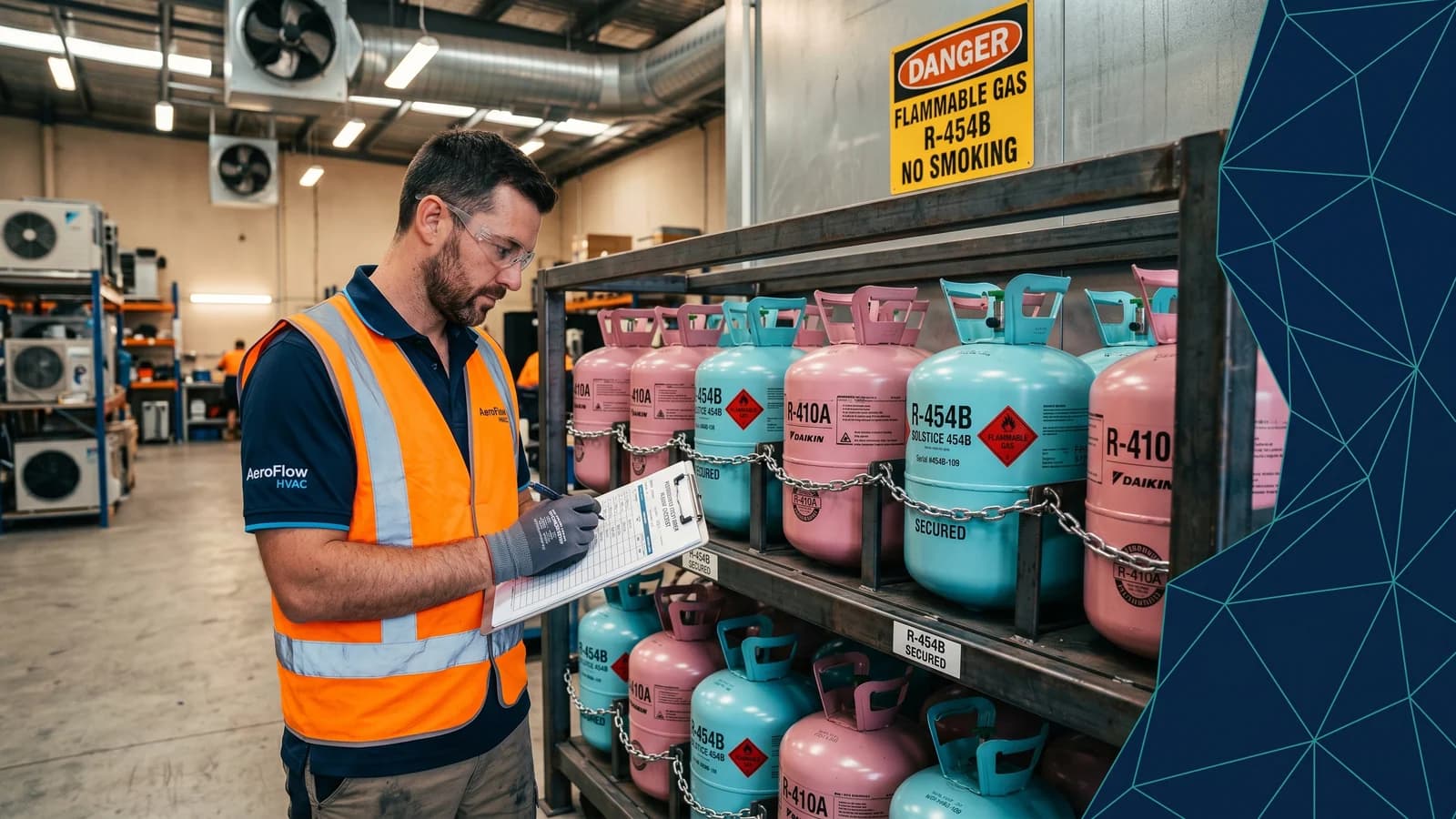
Refrigerant cylinders are DOT-classified hazardous materials. For an HVAC contractor hauling cylinders from the supplier to the jobsite in a work truck, that carries specific rules around labeling, securement, transport quantity, and storage.
Cylinder labels
Every cylinder must have: a DOT specification marking (DOT-39 disposable or DOT-4BW/4BA refillable), refrigerant identification by number and name, hazard class diamond (2.2 non-flammable / 2.1 flammable for A2L), net weight, tare weight, and manufacturer/filler info. Never service an unlabeled cylinder.
Transport in a service truck
- Secure cylinders upright - straps or rack, not loose on the bed
- Keep below 125°F - trucks in Houston summer can exceed this; consider insulated boxes
- Quantities: most service trucks stay under 1,001 lb hazmat threshold where a commercial hazmat endorsement is required
- Shipping papers / MSDS / emergency contact: required in the vehicle for any shipment over 1 lb
Shop/warehouse storage
- Dry, ventilated, cool area - never above 125°F
- Segregate A1 and A2L cylinders visually - A2L flammable requires more ventilation and ignition source exclusion
- Upright, secured, valve-protected (caps on when not in use)
- Out of direct sunlight
- Posted hazard signage per OSHA 1910.144 and 1910.145
Disposal of empty cylinders
DOT-39 disposable cylinders - return to the supplier or recycle per local hazmat rules. Never vent residual refrigerant to empty them. DOT-4BW/4BA refillable - return to the supplier for recertification and refilling.
Shop EPA 608-compliant refrigerant with same-day Houston delivery
Virgin, factory-sealed cylinders. Bulk pricing from 5+. Net-30 terms for approved business accounts.
Shop Refrigerants