
R-32 Refrigerant Guide - Mini-Splits and Low-GWP AC in 2026
R-32 is the global standard for mini-split heat pumps and is gaining US share. Properties, applications, GWP, and how it compares to R-454B and R-410A.
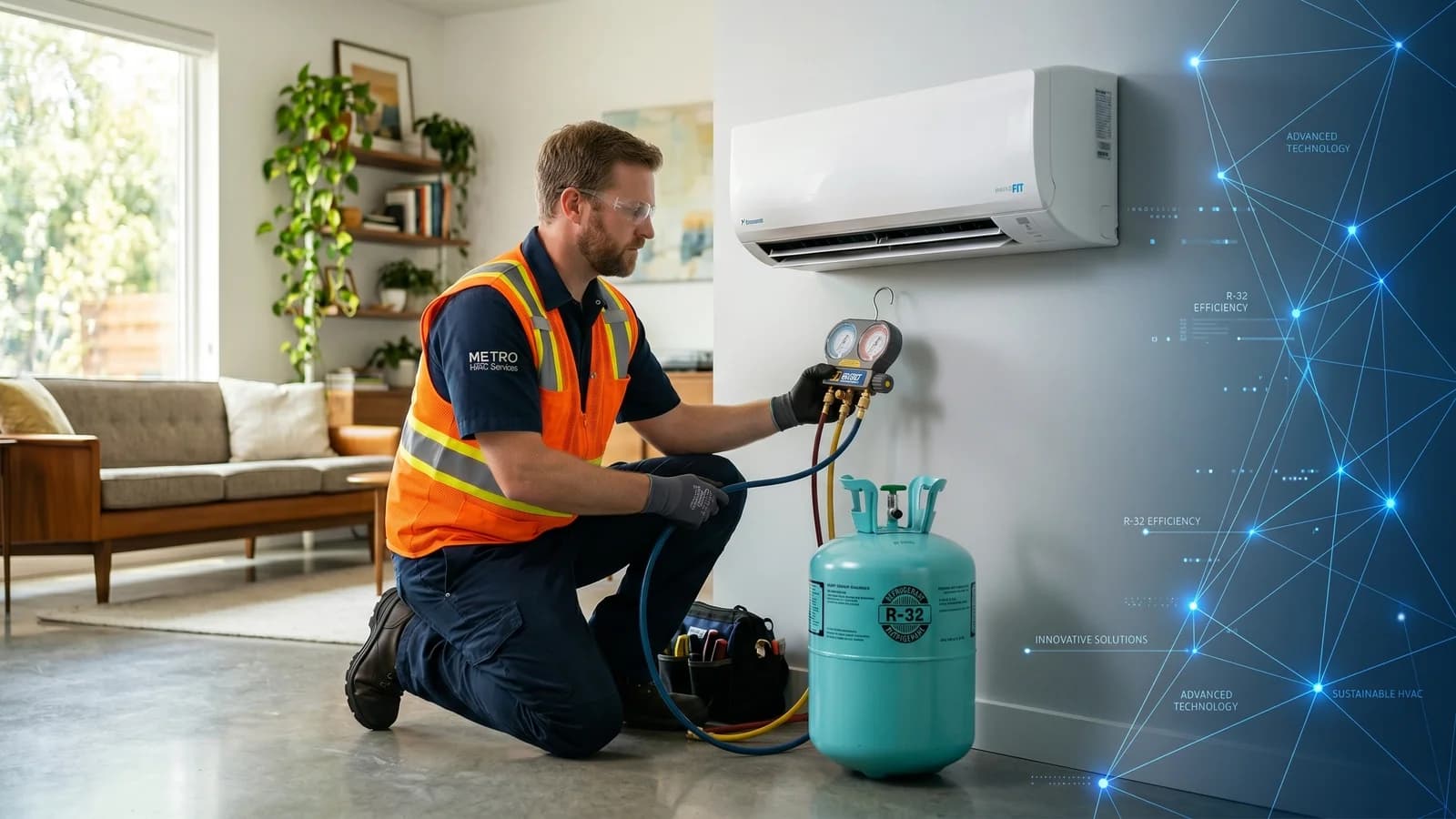
R-32 (difluoromethane) has been the dominant refrigerant in Japanese, Australian, and European mini-splits for nearly a decade. Now it's accelerating in the US residential and light-commercial market as OEMs look for low-GWP alternatives to R-410A.
Why R-32 matters
- GWP of 675 (vs R-410A's 2,088) - 68% lower
- Single-component refrigerant, not a blend - easier to recover and reclaim
- Higher volumetric cooling capacity - smaller lines, less charge, smaller components
- Widely adopted internationally - mature supply chain
Where R-32 is used
Primarily in mini-split heat pumps (single-zone, multi-zone), VRF systems, and some light commercial rooftop units. Daikin, Mitsubishi, LG and Fujitsu all ship R-32 heat pumps in the US now. You'll see it more in new installs going forward.
Safety class
R-32 is classified A2L - mildly flammable. Same safety rules apply as R-454B: A2L-rated equipment, supplemental safety training, proper ventilation and leak detection.
R-32 vs R-454B
Both are A2L. R-454B has a lower GWP (466 vs R-32's 675) because it's a blend that includes R-1234yf (an HFO with GWP <1). R-32 is simpler to recover/reclaim because it's single-component. In the US residential market, R-454B dominates new builds in ducted split systems, while R-32 dominates ductless mini-splits.
Shop EPA 608-compliant refrigerant with same-day Houston delivery
Virgin, factory-sealed cylinders. Bulk pricing from 5+. Net-30 terms for approved business accounts.
Shop Refrigerants